


Faithfulness — that quiet, steady, often unnoticed virtue — is one of the most powerful forces in a believer’s life. We live in a world that celebrates the grand gestures, the viral moments, the overnight success stories. But God has always worked differently. He looks at what you do when no one is watching. He pays close attention to how you handle the small assignments before handing you the bigger ones. And if you’ve ever felt like your life is stuck in a season of smallness, this post is for you.
Because here’s the truth: the “little things” are never really little to God.
What Does Faithfulness in the Little Things Actually Mean?
Before we dive deeper, let’s establish what we’re talking about. Faithfulness in the little things means showing up consistently, doing what you said you would do, giving your best even when the task feels insignificant, and trusting God’s process even when it seems painfully slow.
It means returning the shopping cart. It means keeping your word to a friend even when it costs you something. It means waking up and spending time in prayer on ordinary Tuesday mornings when nothing spectacular is happening. It means being excellent at your job even when your boss doesn’t notice. It means tithing faithfully when your bank account is tight. These things feel small. But they are, in fact, the building blocks of a life of great purpose.
Jesus spoke directly to this in Luke 16:10:
“Whoever can be trusted with very little can also be trusted with much, and whoever is dishonest with very little will also be dishonest with much.” — Luke 16:10 (NIV)
That word “trusted” is loaded. In Greek, it’s pistos — meaning faithful, reliable, trustworthy. It’s the same root as the word for faith itself. So when Jesus says this, He is not just giving a productivity tip. He is teaching a kingdom principle: faithful stewardship of the small things is the pathway to greater responsibility.
The Parable That Changes Everything: Faithful Servants and the Master’s Return
Perhaps the clearest picture of this principle comes from the Parable of the Talents in Matthew 25. You probably know the story. A master entrusts his servants with different amounts of money — five talents, two talents, and one talent — and then he leaves on a long journey. When he returns, two of the servants have doubled what they were given. The third buried his.
The master’s response to the faithful servants is one of the most beautiful affirmations in all of Scripture:
“Well done, good and faithful servant! You have been faithful with a few things; I will put you in charge of many things. Come and share your master’s happiness!” — Matthew 25:21 (NIV)
Notice what the master doesn’t say. He doesn’t say, “Well done, you spectacular servant.” He doesn’t say, “Well done, you gifted servant.” He says faithful. That’s the quality that earns the promotion in God’s economy. Not talent alone. Not charisma alone. Faithfulness.
Also, notice that both the servant with five talents and the servant with two received the same reward and the same praise. The master didn’t reward based on output volume — he rewarded based on the quality of stewardship. You don’t have to be the most talented person in the room to receive God’s “well done.” You simply need to be faithful with what He gave you.
Why God Uses the Little Things to Prepare Faithful People
If you look throughout Scripture, you’ll notice a consistent pattern: God calls people through small, ordinary moments and then prepares them through seasons of quiet faithfulness before releasing them into their purpose.
Consider David. Before he ever stood before Goliath, he was faithfully tending his father’s sheep in the fields — a job so ordinary that even his own father forgot to call him when Samuel arrived to anoint the next king (1 Samuel 16:11). But what was David doing out there? He was fighting lions and bears. He was worshipping God with his harp. He was building both skill and intimacy with God in a season that felt entirely invisible. And when the moment came to face the giant, David didn’t panic. He drew from everything God had developed in him during the little-things season.
Then there’s Joseph. Sold into slavery by his own brothers, falsely accused and thrown into prison — yet at every stage, Joseph remained faithful. Genesis 39:2-4 tells us that “the Lord was with Joseph so that he prospered… his master saw that the Lord was with him and that the Lord gave him success in everything he did.” He didn’t wait until he was in a more respectable position to start being excellent. He was faithful in Potiphar’s house before he was elevated to second-in-command of all Egypt.
Moses spent forty years in the wilderness tending sheep before God appeared to him in the burning bush. Ruth faithfully gleaned in fields before she was restored and honored. Esther faithfully prepared before she stood before the king. The pattern is unmistakable: God builds faithful character in the small places before He calls us to the large stages.
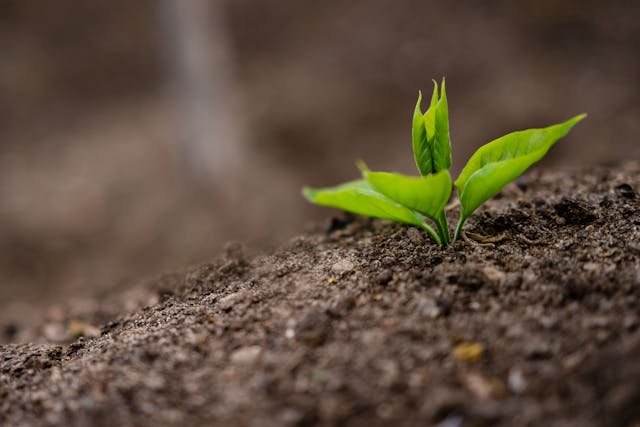
The Danger of Despising Small Beginnings
One of the enemy’s most effective strategies is to make you feel like your current season doesn’t matter. He whispers that your job is too small, your platform is too small, your influence is too limited, your gifts aren’t polished enough yet. He tells you to wait until things are bigger before you start showing up fully.
But Zechariah 4:10 directly confronts this lie:
“Do not despise these small beginnings, for the Lord rejoices to see the work begin.” — Zechariah 4:10 (NLT)
The Lord rejoices. Present tense. Right now, in your small, consistent, faithful obedience — God is pleased. He is watching. He is taking note. He is not withholding His joy from you until you reach some future milestone. He rejoices over the faithful work you are doing right now.
Moreover, despising small beginnings often produces a kind of spiritual paralysis. When we decide that our current assignment is beneath us or not worth full effort, we actually disqualify ourselves from the greater assignments. We’re essentially telling God, “I can’t be trusted with this, so please don’t give me more.” That’s the opposite of what we want.
Instead, we should approach every small task as an act of worship. Every email written with care, every commitment honored, every ordinary Tuesday spent in faithfulness — these are offerings to God. As Colossians 3:23 reminds us:
“Whatever you do, work at it with all your heart, as working for the Lord, not for human masters.” — Colossians 3:23 (NIV)
Faithfulness in Your Relationships: The Little Things That Build Big Love
It’s also worth noting that faithfulness in small things doesn’t only apply to work and calling — it absolutely transforms our relationships. In fact, most relationships don’t fall apart because of one catastrophic event. They erode slowly through the consistent neglect of small things.
Faithfulness in relationships looks like checking in on a friend who mentioned they were having a hard week. It looks like apologizing quickly when you’ve spoken harshly. It looks like putting your phone down during dinner and being genuinely present. It looks like keeping the small promises — the “I’ll be there at 7” and the “I’ll pray for you” and the “let me know if you need anything.”
When we practice faithfulness in the texture of everyday relational life, we build the kind of deep trust that weathers storms. Proverbs 17:17 says that “a friend loves at all times, and a brother is born for a time of adversity.” That kind of consistent, all-seasons love is itself an act of daily faithfulness.
And for those who are married or in committed relationships: the little things are everything. The spontaneous notes, the remembered preferences, the consistent kindness, the daily choice to honor your person — these are the deposits that keep the account full. Don’t wait for the grand anniversary gesture to express love. Be faithful in the ordinary moments.
What Faithful Living Looks Like in a Distracted World
Here’s a challenge we all face in the 21st century: staying faithful in small things is hard when the world constantly offers us the illusion of shortcuts, and when our attention is constantly being pulled in a hundred directions. Social media shows us everyone else’s highlight reel and makes our faithful, behind-the-scenes work feel invisible and pointless.
But here’s a perspective shift that can be life-changing: the faithful life is not the unseen life. God sees it. And in Matthew 6:4, Jesus promises that “your Father, who sees what is done in secret, will reward you.” The audience that matters most is already watching. And He doesn’t miss a single act of faithful obedience, no matter how small.
Additionally, practicing faithfulness in small things actually rewires us for contentment and consistency. When we learn to give our best to what’s in front of us today, we stop living in the anxious future or the regretful past. We become fully present, fully invested people — and that kind of intentional presence is increasingly rare and therefore increasingly powerful.
Here are some practical ways to cultivate faithfulness in everyday life:
Start your morning with intentionality. Even five minutes of prayer and Scripture grounds you in God’s perspective before the demands of the day crowd in. A faithful morning practice compounds over time into a transformed mind (Romans 12:2).
Do what you said you would do. Your word is your character made visible. When you consistently follow through on commitments — big and small — you build a reputation for trustworthiness that God can work with and that others will rely on.
Give your full effort to your current role. Whether you’re in a season of obscurity or visibility, bring excellence. Not perfectionism — excellence. There’s a difference. Perfectionism is fear-driven; excellence is love-driven and God-honoring.
Practice financial faithfulness. How we handle money is one of the clearest indicators of our inner trust in God. Tithing faithfully, giving generously, and stewarding wisely are all acts of faithful obedience that God takes seriously (Malachi 3:10, Luke 16:11).
Show up for people consistently. The faithfulness of your presence — at the hospital bedside, at the birthday party, in the hard conversation — speaks louder than most sermons ever could.

When Faithfulness Feels Hard: Encouragement for the Weary Faithful
Let’s be honest — sometimes being faithful in small things is genuinely hard. It’s hard to keep giving your best when you feel overlooked. It’s hard to keep showing up when you can’t yet see the fruit. It’s hard to keep being excellent in a role that seems to have no ceiling for growth. Faithfulness, in those seasons, requires grit and grace in equal measure.
Galatians 6:9 was written for exactly those moments:
“Let us not become weary in doing good, for at the proper time we will reap a harvest if we do not give up.” — Galatians 6:9 (NIV)
Notice the phrase “at the proper time.” Not at your preferred time. Not on your timeline. At the proper time — which is God’s time, which is always the right time. The harvest is coming. But it requires that you don’t give up before it arrives.
Also, remember that God is not just watching what you produce — He is watching who you are becoming through the process of faithfulness. The small-things seasons are often the sanctifying seasons. They strip away pride, expose hidden idols, build patience, and forge a depth of trust in God that simply cannot be manufactured any other way. The person who emerges from a long season of faithful obscurity is the kind of person who can handle a large platform with humility and grace.
Think about how gold is refined: it must pass through intense heat before it gleams. Your faithful endurance in the small, hot, ordinary moments is producing something beautiful. Don’t walk away from the furnace too soon.

The Fruit of a Faithful Life: What God Builds Through Consistent Obedience
Over time, a life of faithfulness produces fruit that is both visible and invisible. On the visible side, faithful people tend to build remarkable things — strong families, thriving ministries, respected careers, deep friendships. Because faithfulness, compounded over time, creates results that are genuinely extraordinary.
But the invisible fruit may be even more significant. Faithful people develop an unshakeable trust in God, because they’ve seen Him come through in the small things over and over again. They develop resilience, because they’ve practiced not quitting. They develop integrity, because they’ve learned that who you are in private determines who you become in public. And they develop a deep, settled peace — because they know they are stewarding their lives well, and the results are in God’s hands.
Proverbs 28:20 puts it simply:
“A faithful person will be richly blessed, but one eager to get rich will not go unpunished.” — Proverbs 28:20 (NIV)
Richly blessed. Not just barely blessed. Not blessed-on-a-technicality. Richly. That word suggests overflow, abundance, flourishing. And it belongs to the faithful person — not the flashiest person, not the most talented person, but the faithful person.
Your Faithful Steps Are Counting
If you’re in a season where the work feels small, the progress feels slow, and the recognition feels absent — take heart. You are not behind. You are not forgotten. You are not wasting your time.
You are being prepared.
Every faithful act of obedience is a stone being laid in a foundation that God is building with purpose and precision. The life He is constructing through your faithfulness is going to be far more beautiful and far more impactful than anything you could rush into through impatience or shortcut.
So keep showing up. Keep doing the small things well. Keep praying when no one sees. Keep serving when no one applauds. Keep being faithful in the relationships, the finances, the work, the calling — because God sees every single bit of it, and He is the kind of Father who loves to say to His faithful children:
“Well done, good and faithful servant.”
That day is coming. Until then — be faithful. In everything. Especially the little things.